The short answer
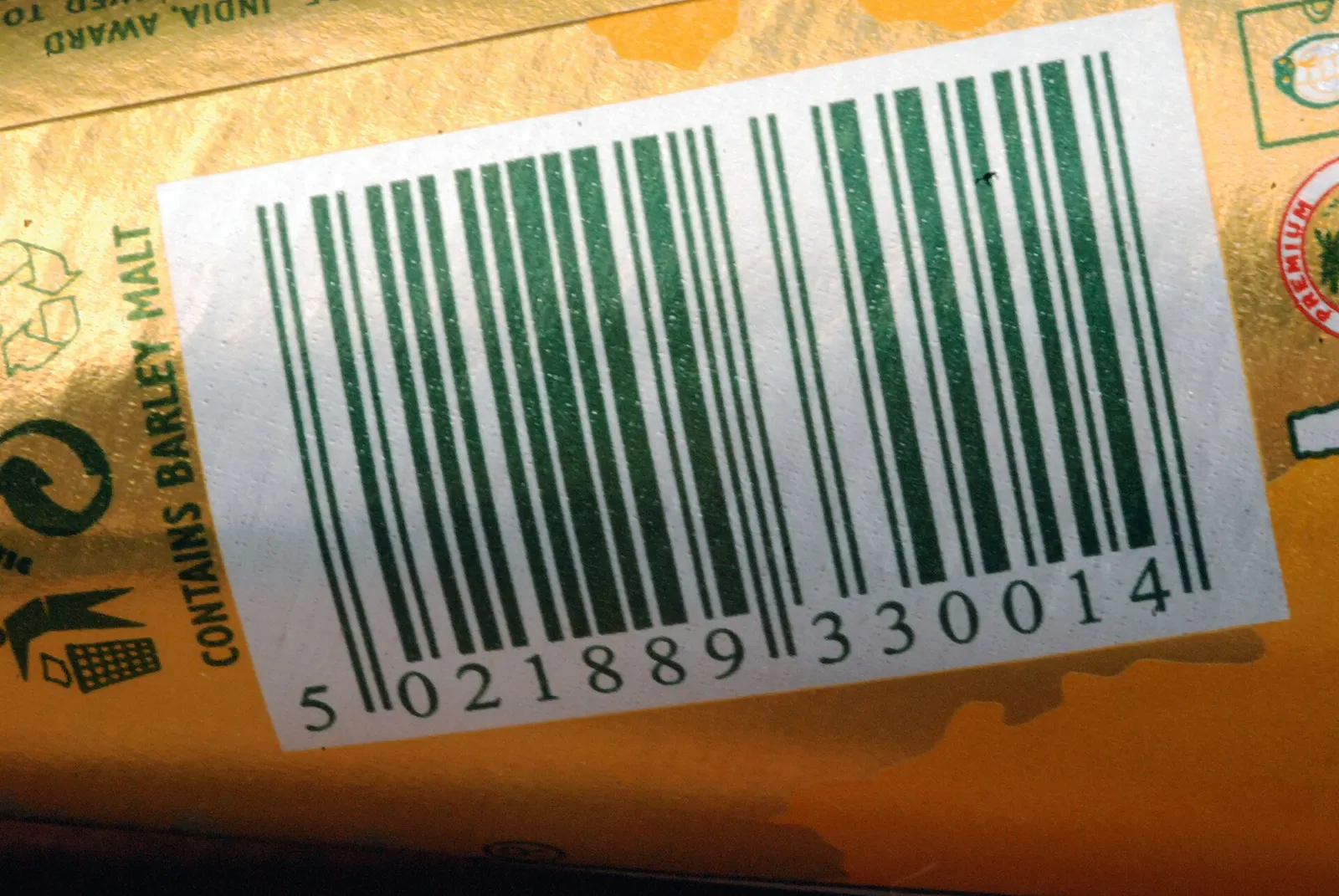
A UPC (Universal Product Code) is a 12-digit number that identifies one specific product, such as "Brand X shampoo, 400 ml, coconut". The black-and-white barcode is just the number in a form a scanner can read. When the till scans it, the shop's system looks up the product's name and price. The UPC itself contains no price.
UPCs have been used since 1974, when the first one, on a pack of chewing gum, was scanned in a supermarket in Troy, Ohio. Today they're managed by GS1, a non-profit that also runs EAN codes in the rest of the world.
What the 12 digits mean
- Company prefix (6 to 10 digits): assigned to the brand owner by GS1. Every UPC that company creates starts with it. The first digit doubles as the "number system", where 0, 1, 6, 7, 8 are ordinary products, 2 variable-weight goods, 3 medicines, 4 in-store use and 5 and 9 coupons.
- Item reference: chosen by the company, a different one for each product and each variation (size, colour, flavour, pack count). The longer the prefix, the fewer item references are left. That's why big brands have short prefixes.
- Check digit: calculated from the other 11 so scanners can catch misreads. Try it in our check digit calculator.

UPC, GTIN, EAN: what's the difference?
GTIN (Global Trade Item Number) is the official name for the number. A UPC-A carries a 12-digit GTIN (GTIN-12). Outside North America the same job is done by the 13-digit EAN-13 (GTIN-13). A UPC is effectively an EAN-13 starting with 0, and scanners everywhere read both. More in UPC vs EAN.
Do I need a UPC?
- Yes if you sell through shops, supermarkets, Amazon (most categories), Walmart Marketplace, Target or Google Shopping for branded products.
- Probably not if you only sell through your own website, at markets, or handmade goods on Etsy. Use your own SKUs, and barcode them with Code 128 if you want to scan them.
Each variation needs its own UPC
A T-shirt in 3 colours and 5 sizes is 15 products, so it needs 15 UPCs. A bundle or multipack sold as one unit needs its own UPC too. Don't reuse a UPC for a changed product: if the size, quantity or main ingredients change, it gets a new number.
How to get UPC codes
In the US, license them from GS1 US. You can buy a single GTIN for one product, or a company prefix for a block of numbers with an annual fee. See our step-by-step guide to getting a barcode for your product. Once you have the numbers, making the barcode artwork is free with our UPC generator.
Can I look up who a UPC belongs to?
GS1's Verified by GS1 service shows the company a number is licensed to, and often the product details. It's the same database Amazon and Google check, so it's worth searching your own numbers after you get them.